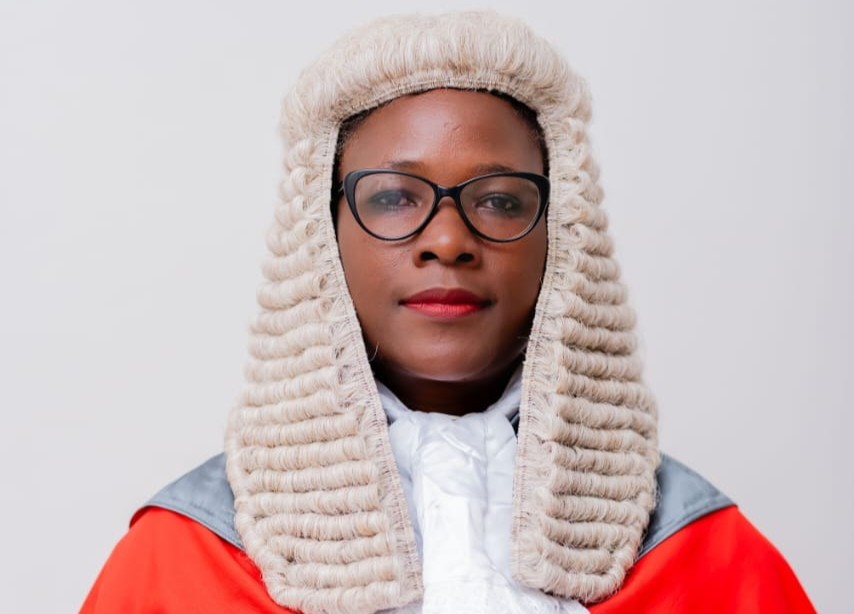
High Court Judge in the Family and Probate Division Justice Madalitso Khoswe Chimwaza has trained the police on human trafficking and the laws that protect children from commercial sex. These officers, alongside Eye of the Child and Free A Girl—a US-based organisation— have successfully rescued children from night clubs and brothels. Caroline Somanje contacted Chimwaza to learn more:
Q: What does the law say about the protection of minors in relation to commercial sex work?
A: The State is mandated under section 13 (h) of the Constitution to adopt policies and enact laws that encourage and promote conditions for children’s healthy development, productivity and being responsible members of society. Section 23 (5) provides that children are entitled to be protected from economic exploitation or any treatment, work or punishment likely to be hazardous, interfere with their education, be harmful to their health—physical, mental, spiritual or social development. The Child Care Justice and protection Act (CCJPA) has chapter six dedicated to protection of children from undesirable environment and prohibition of trafficking in children.
The law entrusts parents with primary responsibility for caring and protecting children. Should parents be unable to look after children or in cases of emotional, physical and sexual abuse of children, the State can take measures to provide substitute care such as removing them from undesirable environment and place them under guardianship, foster care, safety home or under the care of a fit and proper person.
The Penal Code has criminalised sexual activities with children from sections 160 A, 160B, 160C, 160D and 160E. Section 160E (1) penalises any person, parent or guardian who causes, procures or allows any child to take part in public entertainment of an immoral nature or which is dangerous to the life of the child. This is punishable with payment of MK100 000 and 7 years imprisonment. A court may also order the cancellation of the licence or suspend it for such a period as the court may think fit if the convicted person is a holder of a licence issued under a law regulating public entertainment. (The police have no justification for not arresting parents, guardians, owners of bars and resthouses under this provision.)
The Trafficking in Persons Act has also criminalised trafficking in children under Section 15 and maximum penalty is 21years imprisonment, but where there are aggravating factors the punishment is life imprisonment.
Malawi has a relatively strong legal framework on trafficking in persons, and related sexual offences against children, but enforcement challenges persist.
Q: Why should the police receive training in laws that protect children from commercial sex?
A: A child who is trafficked needs care, protection and must always be handled that way. Therefore, the police entrusted to carry out the exercise need training on how they can protect children during the exercise in compliance with the law and considering that they are victims, not suspects. They need knowledge on which law mandates them to do that, the procedural requirement to comply with and skills to handle the children with a victim-centred approach. By putting the victim/survivor at the centre of the process, such an approach promotes their recovery, reduces the risk of further harm and reinforces their agency and self-determination.
This approach also establishes a relationship with the victim/survivor that promotes their emotional and physical safety, builds trust and helps them to restore some control over their life. Failure to comply with the substantive law and procedural requirement would frustrate their good intentions because their actions would be questioned or challenged and the children themselves were going to be hostile and not oblige to leave the undesirable environment.
Q. What is the sentence perpetrators receive for recruitment and trafficking of such children?
A: For trafficking in children under Section 79 of the CCJPA the maximum penalty is life imprisonment. Under Section 15 of the Trafficking in Persons Act, the maximum penalty for trafficking in children is 21years, but where there are aggravating factors the punishment is life imprisonment. Under the Penal Code any person found guilty of sexual activities with a child the punishment if 14years. Where the perpetrator is a person in a position of trust or authority like a parent, step parent, foster parent, teacher, guardian or is a person who has the guardianship or in-charge of the child or is a person with whom the child is living with as part of his household the punishment is 21years.
Q. Are we doing enough to deal with the trend?
A: In terms of enacting the laws Yes! we have done enough for now. All we need is to ensure that the law is implemented or enforced to offer protection to children. The police should be vigilant to arrest perpetrators of sexual activities/violence against children. The law is clear that a ‘child’ is a person under the age of 18 years and it does not discriminate whether boy or girl and regardless of the circumstances of birth, orphaned or abandoned, they are all entitled to be protected by the state. Whether the child consented or accepted to indulge in the sexual activity it remains an offence because the law does not recognise consent given by a child. It is not consent at all and it does not absolve criminal liability.
There is need to raise awareness to the young girls and boys in rural areas where the recruitment is done that any person taking them to town promising employment should be reported to the authorities. Although ignorance of the law is not a defence, but the parents should also be sensitised that their consent to having their young child be recruited through the promise of employment will make them an accomplice to the crime. Bars and rest-house owners should be sensitised that they will be committing offences if they provide shelter/harbour these young boys or girls for purposes of doing commercial sex.
They can be charged with the offence of promoting prostitution contrary to section 147A of the Penal code. The accused must engage in activities related to owning, controlling, managing, supervising or otherwise keeping a house or business for the purpose of prostitution and the maximum penalty is 14years imprisonment with hard labour.
Q: why do we have many girls in night clubs besides having laws prohibiting children as sex objects?
A: The commercial sex business is heavily funded by those who run the industry. They put in resources to transport the young girls or boys from different parts of the country with a promise of a job and good life. It is an industry that is heavily guarded and protected by those who benefit from it. The other problem is that ‘the moral and social fabric’ of society has broken-down. The ‘the family unit’ where children are supposed to be born, raised and feel safe and protected has broken down due to high divorce rates, economic challenges and single motherhood.
Married men are absent fathers who have abdicated their responsibility of providing for their home and children. Therefore, some children are left to fend for themselves or to contribute to the running of the home and this expose them to transactional sex, exploitation by clients, and survival-based activities such as street begging, all of which heighten their vulnerability.
The men who sexually patronise these young girls and boys are not arrested and held accountable for their actions, largely because the victims do not wish to betray the perpetrator who at that time appears to be doing them a financial favour. In most cases the perpetrators of trafficking in persons are powerful and financially effluent and the victims fear to report or to testify against perpetrators.